
How do you feel when the nights start to get darker? The temperature drops? Some people love the winter; the cosy nights in by the fire! But there’s no doubt, that objectively speaking, life is harder in winter, even in modern times.
We have drastically less hours of light to do things in, so our energy and productivity can drop. We are less likely to go out for an evening stroll, less likely to go to social events. So there can be an element of isolation that comes along in winter, especially for those living alone or as single parents.
The pressure of soaring fuel costs, can worry even the most laid-back of sorts. Although keeping warm is not a new challenge. I often wonder if the intricate Scottish reels and complicated Ceilidh dances were born out of this need to survive the winters. Literally, dance or die! We certainly know the heat which can be generated by a round of Strip the Willow!
What can Psychology offer to this sometimes bleak situation??? Cognitive Behavioural Therapy (CBT) has become so popular in the last 30 years that most people will have heard of it. The main model, the ‘hot cross bun’ and often-used thought records, might lead people to think it’s only a matter of ‘Mind Over Mood’, but I would argue that the real physical environment is hugely important to how we feel.
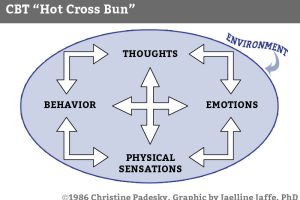
For example, the winter environment has a direct effect on our physical body, like lower vitamin D and lack of light, which can lower mood. The weather impacts our behaviour, doing less, or less social interactions, also lowering mood. With higher living costs, it’s more likely our thoughts will wander to worry or stress; lack of cash might lead us to do less and isolation might lead to low mood. Pretty depressing indeed!
The beauty of this model, however, is that everything affects everything else. It all interacts! So accepting that the winter environment is likely to have an impact on us, we can then consider what we can change or do that will help or counteract some of these effects and lift our mood again.
We can try to keep physically active by going out walking anyway, wrapped up warmly or joining an indoor activity group. We can arrange regular social meet ups in people’s houses, keeping contacts going and heating only one place instead of several. We can attend evening events, including Ceilidhs and dance nights, encouraging friends to go, sharing lifts.
We can also keep a wee eye on those pesky negative thoughts. When we feel low, we see the world through dark tinted glasses, when we’re anxious, we imagine the worst. So noticing this, catching the thought and looking for a more helpful one, can help us to feel brighter or calmer. We can also try to practice self compassion. The inner critic always gets us down, telling us we should have gone out for a walk, we should have gone to the gym! Imagine the opposite character, your Ideal Compassionate Other. They understand how the rain put you off, how hard a Scottish winter can be and won’t judge you for your understandable lack of energy. They will encourage, forgive, support and wish you well, all the way to the spring!